 Custom system integration
 Embedded Redesign
 Board Support Package for System Houses
NXP SoC and processor platforms
i.MX 2x, i.MX 6xi.MX 8x & i.MX 9xVybrid
SIGMA integrates SoC-, SoM- and SBC-based embedded systems into bespoke products. We create and adapt BSPs, develop drivers and integrate bootloaders, kernel/OS images and product-specific peripherals into a system that boots reliably.
Please bring your own hardware, evaluation board or existing platform. We will advise you on the best way to get started with the software.
A manufacturer’s SDK designed for the evaluation board, including the operating system, is a sensible starting point. However, this foundation is often insufficient for production hardware. Custom carrier boards, different memory configurations, displays, cameras, touch controllers, sensors or specialised interfaces alter the requirements for the system software.
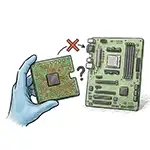 Dedicated carrier board
Your hardware differs from the evaluation board or reference design.
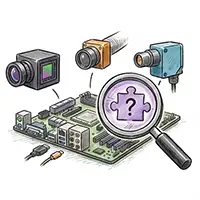 Peripheral device without a suitable driver
Special components are not fully supported.
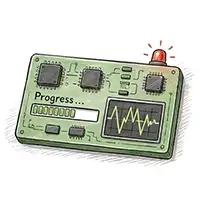 Unstable system start-up
The device does not boot reliably
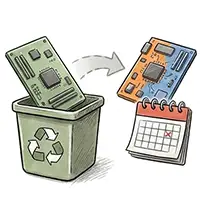 Change of platform or discontinuation
The hardware infrastructure needs to be replaced
SIGMA operates on a platform-independent basis. Our developers have created or adapted BSPs for SoCs and SoMs from various manufacturers, developed drivers and provided technical support for projects. The overview shows a selection of processors and manufacturers with which we already have practical project experience. Examples from our practical experience range from NXP i.MX and TI Sitara platforms to Intel PXA255, PXA270, PXA320 and IXP425, as well as Xilinx Zynq-7000.
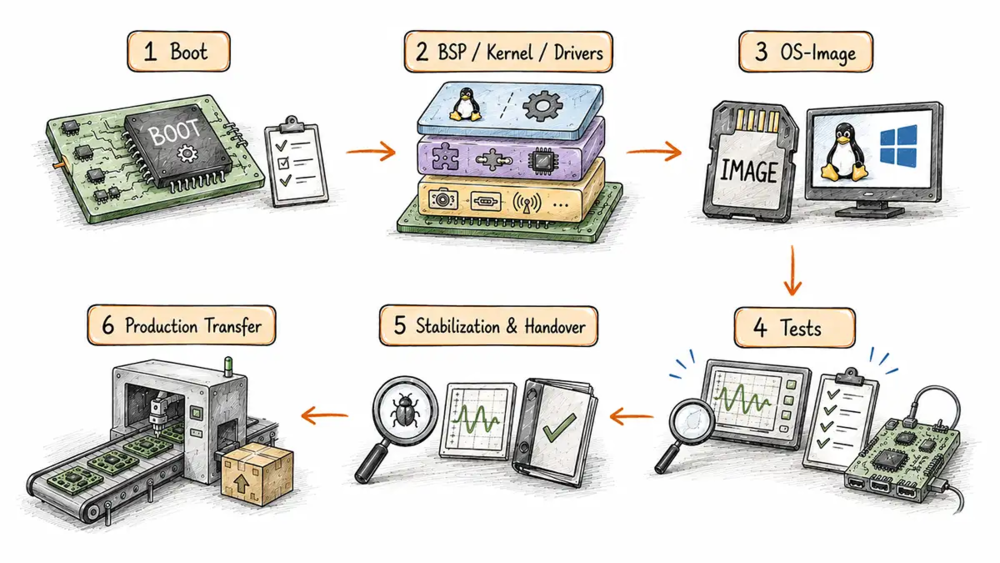
SIGMA does not regard SoC and SoM integration as an isolated driver task. Depending on the initial situation, we work on the relevant layers of the software stack – from the initial boot process right through to a maintainable system image.
Boot
Configure or customise the bootloader, check the system boot process, and analyse memory accesses and console access.
BSP / Kernel / Treiber
We take over or create BSPs, configure kernels, and tailor hardware descriptions and interfaces to the target hardware. We adapt or develop new standard and specialised drivers for product-specific peripherals.
OS-Image
Create and maintain bootable images for Embedded Linux and Yocto, as well as for existing platforms running Windows CE or Windows Embedded Compact.
Testing
We do software testing and analyse the interaction between the boot process, the operating system, the drivers and the peripherals.
Stabilisation & Handover
We analyse any errors that arise, ensure that build states can be reproduced, and test the system’s behaviour under continuous operation. Changes to the BSP, kernel, drivers and configurations are documented in a traceable manner, ensuring that the software base remains maintainable in a targeted manner.
Series transfer
If you wish, we can support you in taking the finished development into series production.
A System on Chip (SoC) combines the core functions of a computer system within a single semiconductor device. Depending on the platform, these may include, for example, processing cores, memory controllers, graphics or video units, network functions and interface controllers.
A System on Module (SoM) combines an SoC with other basic components such as RAM, flash memory and power management (PMIC) on a compact module. The product-specific hardware is usually connected via a custom carrier board.
A single-board computer (SBC) or evaluation board is often used as a development and proof-of-concept platform before the software is ported to a production device.
| Hardware platform | Typical starting point | Our software-related task |
|---|---|---|
| Evaluation board | A system integrator’s SoC, SoM and carrier board form the basis for development. | Configure the system, connect additional peripherals, and prepare for the proof of concept and migration to the eventual target hardware. |
| System on Module (SoM) | The SoC, memory and basic functions are located on an SoM (manufacturer: Systemhaus), whilst the customer-specific peripherals are housed on the carrier board. | Adapt the BSP and drivers to the carrier board, interfaces and connected components. |
| SoC on a customised board (e.g. SBC) | The SoC is integrated directly onto the company’s own hardware. | Tailor the boot chain, BSP, kernel, power management and drivers to the specific board. |
What matters is not whether the processor is used directly on a customised circuit board or within a module. What matters is that the software has complete, reproducible and long-term control over the specific target hardware.
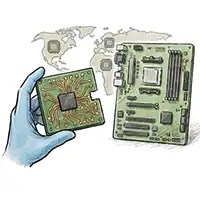 New platform selected
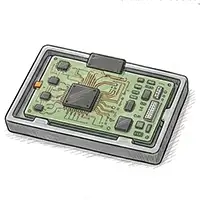 Custom carrier board complete
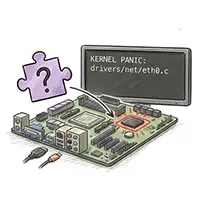 BSP or drivers are causing problems
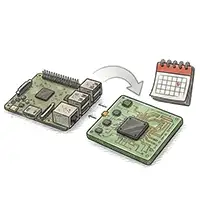 It’s time for a hardware upgrade
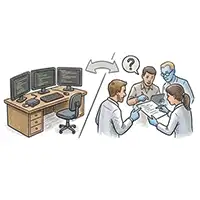 In-house development needs support
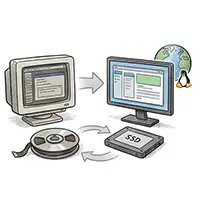 Change of operating system
Whether the hardware decision has already been made or there are still several SoC or SoM options to choose from: we evaluate the platform from the perspective of subsequent software integration – from the available base software right through to the production-ready target hardware.

Classifying requirements
We record the operating system, interfaces, peripherals, real-time requirements and existing software.

Evaluating platforms from a software perspective
We evaluate SoC, SoM and SBC options based on their BSP foundation, driver stack, boot chain and maintainability.
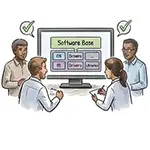
Defining the software base
We determine which existing BSPs, system images or software components can be usefully utilised.
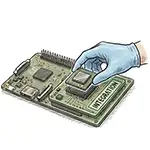
Integrating target hardware
We tailor the bootloader, BSP, kernel, hardware description and drivers to the target hardware and peripherals.

Stabilise and hand over
Following extensive testing, we analyse any remaining errors, optimise runtime and document the adjustments made.
A system-on-chip, or SoC for short, is a semiconductor device that combines the key functions of a computer system. These may include processing cores, memory controllers, graphics or video units, and interfaces for networks and peripherals. The specific range of functions depends on the particular processor family.
An SoC is the processor chip itself. An SoM is a module that typically combines an SoC, RAM, flash memory and other basic functions. The SoM is mounted on a carrier board, which provides the product-specific interfaces and components.
A Board Support Package provides the hardware-specific software foundation for a specific platform. Depending on the operating system, it includes, amongst other things, bootloader configuration, the kernel, hardware description, drivers, system configuration and the build environment for a bootable image.
Yes. You can get started using a manufacturer’s SDK, an existing BSP, an evaluation image or a working legacy device. In an initial technical assessment, we determine which components can be reused, where customisation is required and what steps are needed for the target hardware.
A manufacturer’s BSP is usually tailored to an evaluation board or reference design. If the memory configuration, pin-out, power supply, interfaces or connected peripherals differ, the bootloader, hardware description, kernel configuration and, where necessary, drivers must be adapted to the actual target hardware.
The device tree describes the hardware present on a platform for the operating system. Among other things, it maps components, interfaces, memory areas and configurations without embedding this information permanently in the kernel. In the case of a custom carrier board, it is therefore a key component of the customisation of the BSP and the kernel.
A reproducible build ensures that a tested system image can be recreated using the same sources, configurations and build steps. This facilitates fault analysis, maintenance, security updates, follow-on development and the transparent handover to internal development teams.
No. SIGMA specialises in embedded software engineering. We do not develop hardware or manufacture SoCs. Our services include the software-based integration of client-supplied or selected platform hardware.
We will be happy to present solutions for your industry and your processes. Talk to the specialists for SMEs.
request now
Our work begins where standard drivers reach their limits. As specialist in embedded software engineering, SIGMA Enterprise Solutions GmbH deliver comprehensive Board Support Packages (BSP) and execute complex custom system integration projects. Furthermore, our targeted embedded redesign services modernize systems facing hardware obsolescence or outdated software, while preserving the proven look and feel of your solution. Embedded Engineering from Chemnitz – stable, high-performance, and sustainable.