
 Custom system integration
 Embedded Redesign
 Board Support Package for System Houses
What the CRA Means for Your Embedded System in Practice
In the embedded systems environment, the Cyber Resilience Act affects not only formal requirements but also specific technical and organizational decisions made during the product development process. For many manufacturers, the challenge lies less in the term itself than in determining how it will impact their own systems, software architecture, and existing development processes.
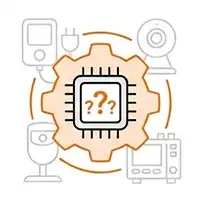 Unclear impact on our own product
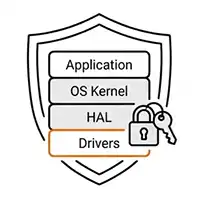 Security requirements for system-level software
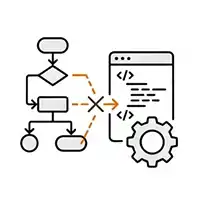 Lack of alignment between processes and technical implementation
 Uncertainty regarding prioritization and approach
CRA-related consulting in the embedded systems field therefore primarily helps to clarify requirements at an early stage, clearly define the scope of technical work, and derive realistic measures for the specific product.
Please note the following deadlines!
Since 11th September 2026: Obligation to report the discovery of exploited vulnerabilities and serious security incidents
From 11th December 2027: Full entry into force of the CRA requirements for products containing digital components
How We Can Help in the Embedded Environment
We help companies technically assess CRA-related issues in embedded projects and develop actionable solutions. In doing so, we work within the jointly defined parameters of your product and development environment.


What we cannot provide
When it comes to the CRA, clear boundaries are essential. We therefore deliberately communicate in a technically precise manner and avoid making blanket assurances. We specialize in embedded software and support you with the technical analysis and implementation of CRA-relevant measures within the context of your project.
What we do not promise in general terms:
No comprehensive evaluation of an entire product in the legal sense
No blanket or legally binding statement regarding a product’s full compliance
No issuance of certificates or certification services
No assumption of manufacturer liability
Our role lies in technical collaboration. This includes classifying relevant requirements, implementing defined measures in the embedded software, as well as documentation and software testing within the agreed-upon project scope.

Initial Consultation and Clarification
We will work with you to determine which technical and organizational issues are actually relevant to your product.
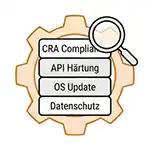
Classification of Requirements
Together, we organize CRA-related topics and, if necessary, bring in experienced contacts from the SIGMA Group.
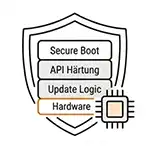
Technical Implementation
Our developers implement defined measures in software, drivers, bootloaders, and system-level components.
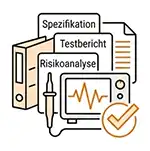
Documentation and Testing
We document the measures implemented and test them under laboratory conditions.

If needed, experienced experts from the SIGMA Group can be consulted for questions regarding the EU Cyber Resilience Act. This allows us to jointly address technical, organizational, and process-related issues and integrate them into the project in a structured manner.
Our embedded developers will then design the code for you in accordance with the constraints and specifications agreed upon, and will take responsibility for documenting it. Testing is then carried out under laboratory conditions where possible. In addition to safety-critical code components or drivers, this may also include code security, management and data exchange.
Topics for which an initial consultation is recommended
An initial consultation is particularly useful if you still need to define CRA-related requirements for an embedded system in more detail, or if it is already clear that technical modifications will be necessary.
Typical starting points include, for example:
You want to assess which CRA-related issues actually affect your embedded system.
You want to determine which software components are likely to require modification.
You want to integrate security requirements into an existing system in a structured manner.
You want to prepare technical documentation early on.
You want to evaluate hardening measures for the operating system, drivers, or bootloaders.
You want to technically and clearly allocate security-related requirements within the project context.
Especially in early project phases, a structured approach helps avoid additional work and misunderstandings later on.
For existing embedded systems, it is necessary to determine which software components, interfaces, update mechanisms, and safety-related functions must be considered in light of the specific requirements. Technical measures and documentation requirements can then be derived from this.
The Cyber Resilience Act is already in effect. However, the requirements do not take full effect on a single effective date but will be phased in gradually.
Key dates are:
Effective September 11, 2026: Obligations to report actively exploited vulnerabilities and serious security incidents
As of December 11, 2027: The key CRA requirements for products with digital elements will apply in full
For manufacturers, this means that even though key product requirements will not fully apply until later, technical and organizational preparations should begin much earlier. Especially for embedded systems, issues such as architectural review, hardening, bootloaders, update mechanisms, documentation, and testing generally require sufficient lead time.
Yes, we provide support for the technical classification and implementation of CRA-related measures in an embedded context. Depending on the project, this may include operating systems, drivers, bootloaders, secure boot concepts, documentation, and testing.
No. We do not make any blanket statements regarding the full compliance of a finished product, nor do we assume any manufacturer’s liability. Our role is to provide technical support within the agreed-upon scope of the project.
Yes. Especially with legacy systems, it makes sense to conduct a structured analysis of the relevant software components, update mechanisms, interfaces, and security-related functions.
During the initial consultation, we can determine, among other things, which CRA-related requirements actually apply to your embedded system, which areas of software might be affected, and what technical measures can realistically be implemented.
Depending on the product, this includes operating systems, drivers, bootloaders, update mechanisms, communication interfaces, data exchange, and security-related software functions.
We will be happy to present solutions for your industry and your processes. Talk to the specialists for SMEs.
request now