
 Custom system integration
 Embedded Redesign
 Board Support Package for System Houses
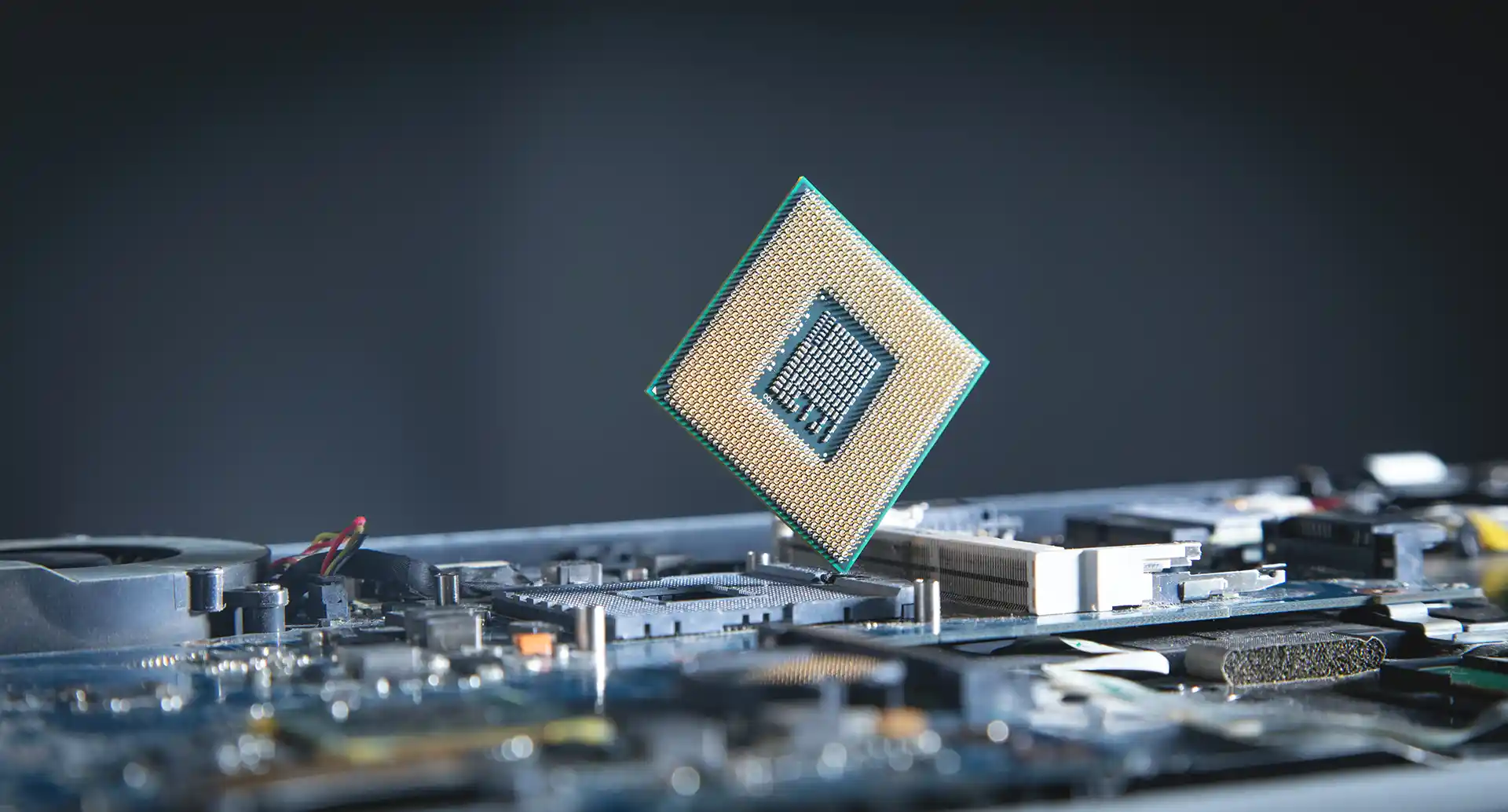
Embedded System Integration with SIGMA
For us, embedded system integration is more than just connecting components; it is about creating a stable foundation for your product innovation. We take responsibility for the critical layer between hardware and application – tailored specifically to your project.



Future-Proof Serial Readiness
We develop embedded systems that can be maintained over the long term and which also take CRA requirements into account in your development work.
How we help: We bridge integration gaps with customized software stacks and integrate your hardware into a complete system ready for mass production. For clearly separated, maintainable applications, containerization with Docker can be a good solution. You’ll benefit from our extensive embedded expertise.
Do you have a vision but lack the technical details or specialized know-how? SIGMA meets you exactly where you are – from initial consulting and hardware recommendations to writing functional specifications (Lastenheft/Pflichtenheft) and technical implementation.

The system is running, but a specific component is causing issues?
Our Solution: Professional driver development and kernel adaptation.

We step in where hardware development meets software requirements. Whether ARM or x86 – we perform embedded system integration based on your specific needs or as a Proof of Concept (PoC) for your vision.
We work with ARM or x86 system on chip plattforms (SoCs), integrated either directly on custom carrier boards or as System-on-Modules (SoM).
We specialize in Linux-based embedded platforms - using Yocto, the latest kernel versions, and other distribution approaches. We also support systems that have evolved over the long term based on Windows CE or Windows IoT, as well as Android or operating system-independent solutions upon request.
In most cases, the customized board and a rudimentary board support package (BSP) are already available. Our task is to implement all the functionalities requested by the end customer by extending, adapting, or reimplementing code in the embedded system integration process—precisely, efficiently, and ready for series production. Our broad portfolio consists of:
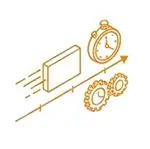

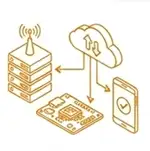


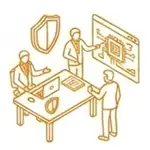
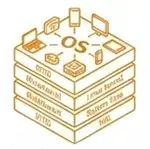
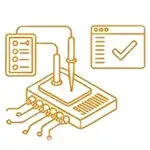

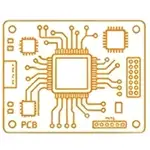
We specialize in the deep integration of complex peripherals and driver development – where standard drivers reach their limits.

Flexible Start
We can join your project at any stage—from initial brainstorming and hardware selection to final specifications.

Agile Development
We work iteratively and agilely. We continuously review progress in a transparent yet secure environment (e.g., Git).

Validation & Communication
Continuous testing and documentation accompany every phase of development.
Delivery & Transfer
Delivery of the service, typically in the form of source code and complete documentation.
Support & Training
Training for your team and long-term support are available upon request.
From micro-enterprises to medium-sized companies to large global corporations—we have been implementing embedded projects in all common industries since 1995, especially where stability and reliability are top priorities.
Our expertise is as diverse as our customers' requirements. The following areas are just a few examples from our cross-industry portfolio of embedded system integration.



























Is your application threatened by EOL (End-of-Life) hardware or an outdated OS? We future-proof your system. By migrating to current SoCs and modern operating systems, we ensure long-term availability.
We port your existing application so precisely that the proven look & feel remains completely intact for your users. Benefit from maximum performance with familiar operation.
We start where you are: from early goal definition and architecture/platform consulting to the concrete implementation of driver/kernel/BSP issues.
Usually the platform/SoC or board/SoM, operating system version, desired peripherals/interfaces, and the specific goal or problem (e.g., instability, latency, boot time, updateability) are sufficient.
We provide the critical layer between hardware and application: driver/kernel development, bootloader/kernel tuning, peripheral integration (e.g., sensors, camera, display), wireless connectivity, and validation through to series production.
Our focus is on Linux (up to the current kernel), but we also support established systems on Windows CE/Windows IoT and Android, as well as operating system-independent solutions on request. On the hardware side, we work with ARM and x86 SoCs on customer-specific carrier boards or purchased SoMs.
No. However, we are happy to advise you on your selection and integrate the hardware you provide into a stable software stack.
Through iterative processes, clear version management (e.g., Git), continuous testing, and documentation—so that changes remain traceable and updates can be planned.
Usually, the handover consists of source code plus complete documentation and integration instructions. Upon request, training for your team and long-term support are available—e.g., for subsequent versions, new peripherals, or kernel/OS updates. Knowledge transfer can be designed so that your team can maintain and expand the solution independently after the project is complete.
Security is implemented pragmatically in system integration: clarify the threat landscape and requirements, then integrate appropriate measures (e.g., secure boot concepts, cryptographic procedures, encrypted file systems, hardening through service shutdowns and access restrictions). It is crucial that security fits the system design (updates, debugging/service, recovery) and remains manageable in field operation – based on the requirements needed in the project.
We will be happy to present solutions for your industry and your processes. Talk to the specialists for SMEs.
request now