Common Challenges in Embedded Vision Projects

When integrating cameras, similar challenges often arise—from initial setup and timing/bandwidth issues to ensuring stable configuration in the field. If you’re facing any of the following challenges, we’re the right partner to help you stabilize the integration technically and integrate it into your software stack.


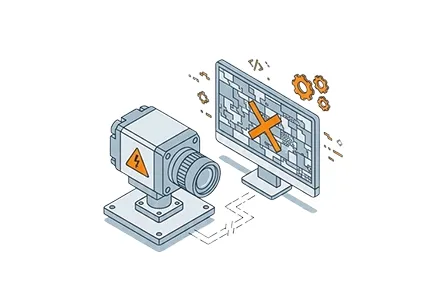
Camera instability / Image distortion / Dropouts

When frames are dropped, timing drifts, triggers don't fire properly, or the system crashes under load, a structured root cause analysis is needed, covering the data path, bandwidth, and driver chain.


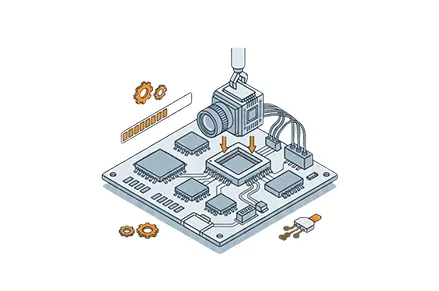
Integration of a new camera module / sensor

You have a specific module/sensor datasheet - but the drivers, configuration, and pipeline integration are missing or are not compatible with the target SoC/OS.


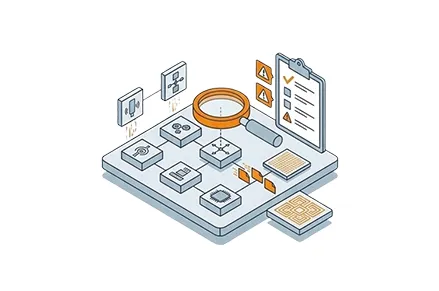
Assess architectural and selection risks early on

Which interface (e.g., MIPI/USB/LVDL), which sensor, and which ISP/pipeline approach is viable in the long term - before the hardware and time budget are finalized?


Where we are specifically getting involved in camera projects

In practice, camera projects rarely start from scratch. Often, there is already a target platform, a selected module, initial image data, or an existing prototype - but the integration remains unstable, incomplete, or technically risky.

That’s exactly where we come in: not only for new camera integrations, but also for ongoing projects, partial upgrades, legacy platforms, and situations where the sensor, interface, and software stack are already defined, but the overall system isn’t yet functioning reliably under load.

You need an urgent problem resolved (debugging & stabilization)

Get in here!


You want to integrate a specific module (driver & pipeline)

Get in here!

You need architecture selection and risk assessment

Get in here!

If an existing system is not running stably

You already have the hardware, initial image data, or a working prototype - but the device is experiencing image errors, dropouts, timing issues, or non-reproducible effects under load. In that case, we’ll conduct a technical root cause analysis covering the control path, data path, driver states, parameter settings, and runtime behavior.


What we typically handle here
  • Ensure that the selected SoC is compatible with the raw data from the sensor
  • Check data paths, bandwidth, and buffering in a running system
  • Isolate trigger, timing, and synchronization issues
  • Analyze driver states, streaming behavior, and error patterns
  • Ensure recovery after a timeout, reconnection, or reboot
  • Improve stability during continuous operation under load, temperature, and field conditions
Sample Project

In a project to integrate multiple specialized cameras, we stabilized the entire camera data path in the target system  - including driver modifications, streaming integration, and systematic debugging of typical error patterns. The focus was on reproducible runtime behavior, robust recovery mechanisms (e.g., after reconnection or timeout), and reliable logging for field operations.


If the module or sensor has been determined but integration is still pending

The camera module or image sensor has been selected, and the datasheet and target platform are available - but the drivers, device tree, configuration, streaming, and pipeline integration have not yet been fully implemented. In this case, we handle the bring-up and integration until the system reaches a usable, maintainable state on the target system.


What we typically handle here
  • Sensor or module analysis, including registers, modes, and control logic
  • Implement the device tree, driver integration, and necessary interface integration
  • Optimize streaming modes, resolution, frame rate, and parameter settings
  • Ensure a technically sound integration of the image pipeline from the sensor to the application
  • Ensure integration for stability, restart capability, and maintainability
Sample Project

We developed a new Linux driver for a specific camera module (VM-016) and implemented its integration on the target platform. The result was a clean, consistently stable connection, including the appropriate kernel and device tree configuration, and a reliably functional capture pipeline within the overall system.


If the architecture, interface, or integration method still needs to be evaluated

Before development time is wasted on the wrong path, we verify that the sensor, interface, SoC, decoder or converter circuit, and image pipeline are technically compatible. This allows us to minimize integration risks, avoid unnecessary iterations, and prevent future detours early on.

What we typically handle here
  • Classify sensors, camera modules, and image requirements from a technical perspective
  • Evaluate interfaces, data paths, and bandwidth against the target platform
  • Realistically assess SoC compatibility, control paths, and integration effort
  • Identify the need for decoder, converter, or ISP components early on
  • Assess technical risks, bottlenecks, and viable integration paths in advance
Sample Project

When implementing a Linux BSP for i.MX8 platforms, including camera integration, we established the architectural decisions early on: the kernel and driver base, interface connectivity, and a robust pipeline structure for the future application. This creates clear technical guidelines, minimizes integration risks, and lays a foundation that remains maintainable even with product variants and long-term operation.


Technology in the camera pipeline

Reliable camera integration isn’t achieved simply by using the right sensor. What matters most is that the control system, data path, image processing, and target platform work together seamlessly. It is precisely at these interfaces that most issues arise in embedded projects - and that is exactly where we come in with our analysis, integration, and stabilization services.


Before a camera system can operate reliably in the target device, the control and configuration layer must be properly set up. Sensors, camera modules, and supplementary components are typically initialized, activated, and configured via I2C, SPI, or GPIO. This involves not only the first image but also clean operating modes, reproducible startup sequences, and behavior that remains stable even during reboots, error conditions, or changing operating states.

We handle the technical coordination of register sets, control paths, trigger signals, and project-specific control logic. This results in integration stages where configuration and runtime behavior not only function on the test bench but also interact reliably in the target system under load.

The video path must be compatible with the platform, the camera module, and the intended processing. In practice, this means that MIPI CSI-2, USB, LVDS, parallel video ports, SDI, and even analog signals such as PAL and FBAS must be integrated in such a way that image data arrives in the system completely, with consistent timing, and remains stable under load.

We analyze and integrate data paths with regard to bandwidth, timing, streaming behavior, and capture stability. In doing so, we not only verify whether image data is present in principle, but also whether the selected transmission path is suitable for the target platform, the desired frame rate, and subsequent runtime behavior. Especially in cases of dropouts, frame drops, unstable streaming, or non-reproducible effects under load, the cause often lies precisely in this interaction.

Not every camera is connected directly to a SoC. In many projects, signals must be converted, existing cameras reused, or different signal types interconnected. In such cases, decoders, receivers, and converters become a central part of the pipeline.

We integrate these intermediate stages into the overall signal path and do not view them in isolation, but always in the context of latency, stability, diagnosability, and platform behavior. This applies, for example, to analog video sources, serial video transmission, bridges between different interfaces, or additional components that make it technically possible to utilize greater distances, existing infrastructure, or more complex topologies. Especially in brownfield scenarios, this is often what determines whether an existing camera environment can continue to be used or fails due to avoidable integration issues.

Many image sensors initially output raw data rather than a directly usable color image. To turn this sensor data into a stable and technically usable image foundation, the Bayer pattern, debayering, and downstream image processing must be seamlessly integrated into the pipeline.

We clarify where raw data is processed, where debayering makes sense, and how image quality, computational load, and latency can be balanced across the entire system. This involves not only the basic functionality but also parameters such as brightness, contrast, zoom, white balance, black level, resolution, and other image-related settings that often have a direct impact on stability and usability in practice. It is crucial that image processing and platform behavior align - not only visually but also technically and reproducibly.

Whether a camera pipeline ultimately runs stably depends on the target platform. That is why we always consider camera projects in conjunction with the SoC, operating system, driver stack, and planned runtime environment. Typical integration environments range from embedded Linux platforms based on i.MX6, i.MX8, or Zynq to existing systems running Windows Embedded or Android.

We evaluate how well the camera, interface, additional components, and software stack fit together technically, and handle the integration in such a way that a robust pipeline emerges from the individual components.  We work on a platform-independent and client-specific basis. The focus is not only on bring-up and initial proof-of-concept, but also on restart capability, maintainability, diagnosability, and runtime behavior that can be reliably validated in the production device.

Field-proven camera modules & sensors for Embedded Vision

Our project experience ranges from industrial image capture and thermal sensor technology to applications in mobility, access control, surveillance, agriculture, and other specialized camera systems. Not every combination used can be publicly described in detail. If your component is not listed, we will assess feasibility based on the datasheet and system context and provide you with a clear assessment of the integration path and next steps in a timely manner.


Image sensors

Experience with image sensors for fast-moving objects, high-detail imaging, challenging lighting conditions, and specialized embedded applications. This includes monochrome, color, near-IR, and thermal imaging applications.

OmniVision

OV5647

Compact MIPI-CSI-based integrations and standard modules

OV5640

5-megapixel CMOS sensor for compact, high-sensitivity applications

OV9281

Fast monochrome capture for time-sensitive imaging tasks

onsemi / Aptina

MT9V024 / MT9P031

Global shutter and 5-megapixel sensors for low-distortion motion capture and high-detail imaging

AR0531 / AR0144 / AR0132

Field-proven sensors for high-resolution imaging, global shutter, and challenging contrast conditions

AR0521 / AR1335 / AR0234

Additional project-proven sensors from the ON Semiconductor family

Sony & other sensors

IMX327 STARVIS / IMX290 STARVIS / IMX708

High light sensitivity, dynamic range, and other project-proven Sony sensor technology

VITA 1300 / MT9M114 / MT9M131 / HTPA32x32d

Global/rolling shutter-style integration solutions, CSI-2-style embedded integrations, integrated image processing, as well as thermal imaging and hotspot detection

Technical Focus Areas
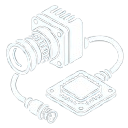
Low-distortion capture during motion
High light sensitivity and dynamic range
Detailed inspection and image capture
MIPI, CSI, parallel, LVDS, or module-level integration

Camera Modules & Specialized Cameras

In addition to individual sensors, complete camera modules and specialized camera systems have also been integrated. This is particularly important when the sensor, optics, module design, and signal routing must all be integrated into the target platform.

PHYTEC / phyCAM modules

VM-016 / VM-053

higher-resolution module variants based on the AR0521

VM-011 / VM-010

Modules with near-global shutter for moving scenes

VM-008 / VM-006 / VM-009 / VM-012

proven standard modules as well as module variants for changing lighting conditions and more dynamic shooting situations

VM-050

Thermal imaging camera module with HTPA32x32d thermopile array

Other camera systems in use

FLIR: Tau2

Skoopia: 21c14s | Photon Focus Cameras

Alvium: 1800C-1236m | iNocturn: HD-SDI | CamSight: LS(+)

Classification

Our project experience ranges from standardized embedded camera modules to thermal, SDI, and specialized camera systems with their own signal routing, optics, or transmission logic.

Technical Focus Areas

Complete camera modules instead of just individual sensors
Standard, global shutter, thermal, and specialty cameras
Module-level integration into embedded platforms
Also suitable for existing platforms and custom systems

Decoders, Converters & ISP Components

In many projects, the integration process doesn’t end at the sensor. Especially when dealing with existing cameras, long transmission distances, or different signal formats, decoders, receivers, bridge modules, and ISP components become a central part of the camera pipeline.

Converting Analog Video Sources to Digital Format

TW9910 / TW9990 / ISL7998x

for PAL, NTSC, and other analog signal sources

SDI and professional video paths

Semtech GS3471 / GS2970

for SDI signal paths and their implementation in embedded systems

Bridges and transmission lines

Texas Instruments DS90UB96x / DS90UB940

for FPD-based integrations and transmission links

Lontium LT9211

as a bridge between MIPI, Parallel, and LVDS

Image processing in the pipeline

onsemi AP1302

ISP component for defined image processing and preprocessing

Technical Focus Areas

Convert analog video sources to digital signal paths
Integrating SDI into Embedded Systems
Connecting MIPI, LVDS, and Parallel Worlds
Seamlessly integrate additional processing steps into the pipeline

SoCs, Platforms & Software Environments

Camera integration is not determined solely by the sensor or module, but always depends on the interaction with the SoC, operating system, driver stack, and runtime behavior. We frequently work on NXP i.MX platforms running Embedded Linux.

NXP i.MX6x

A proven foundation for industrial production devices, legacy platforms, and long-lasting embedded systems. The i.MX6 remains a relevant choice in many projects, particularly for stable camera and decoder pipelines, traditional Linux integration, and brownfield-oriented development.

NXP i.MX8x / i.MX8M

More computing power for more complex image processing, more advanced camera interfaces depending on the model, tighter integration between the HMI and display, and more powerful video and streaming pipelines. This often involves a clean driver base, device tree, clock and power management, as well as stable V4L2 and GStreamer paths on the target device.

Xilinx Zynq Z7x (Xilinx Zynq-7000 family)

Xilinx Zynq Z7x aka Xilinx Zynq-7000 platforms are particularly suitable when software and hardware-related signal paths need to interact more closely. In addition, we focus on Embedded Linux in existing target systems, as well as on established environments running Windows CE, Windows Embedded, or Android.

Technical Focus Areas

BSP, Device Tree, and Driver Integration on i.MX Platforms
Stable V4L2 and GStreamer pipelines on the target device
Properly test clock, reset, power, and recovery behavior
Further develop existing platforms and off-the-shelf devices to ensure technical reliability

Project Process with SIGMA

Abgleich & Zielbild

Quick Assessment & Vision

You describe the current situation, hardware/modules, and target requirements - we clarify the scope, constraints, and priorities.

Technischer Quick-Check

Technical Quick Check & Plan

We review based on our experiences interfaces, data paths, driver status, and risks, and define the integration approach, milestones, and acceptance criteria.

Integration & Implementierung

Integration & Implementation

We implement BSP, kernel, and device tree customizations, integrate drivers, and seamlessly incorporate the components into your system.

Test, Debugging & Stabilisierung

Testing, Debugging & Stabilization

We verify functionality, performance, and long-term behavior, resolve issues, and enhance recovery and logging capabilities for production use.

Übergabe & Support

Delivery & Support

You will receive the source code and documentation; upon request, we can assist with maintenance and further development or provide training.

Get your project off to a quick start with us

To ensure we can dive right into the technical details during our initial consultation and clearly define the next steps, it would be helpful to have some specific information about your system and your objectives. If not everything is available yet, that’s no problem - we’ll start with what we have.


For example, the following factors are helpful:

  • Resolution, frame rate, and latency
  • Lighting and environmental conditions
  • Production series, prototype, or feasibility phase
  • Timeframe and technical constraints

For example, the following factors are helpful:

  • SoC, board, or target platform
  • Camera module or sensor name
  • Planned interface, such as MIPI CSI-2, USB, parallel, or LVDS
  • Existing camera or carrier hardware

For example, the following factors are helpful:

  • Operating system or build system
  • Embedded Linux, Yocto, Android, or existing platform
  • Kernel version and driver status
  • V4L2, GStreamer, ISP, or existing camera pipeline

For example, the following factors are helpful:

  • Bring-up, prototyping, integration, or field operation
  • Dropouts, video glitches, or unstable streaming
  • Performance issues or missing driver support
  • Reproducible error patterns or specific goals

For example, the following factors are helpful:

  • Data sheets and registry entries

  • Circuit diagram excerpts &  block diagrams

  • Device tree, kernel configuration, or build information

  • Log excerpts such as dmesg or kernel logs

  • Brief steps to reproduce the issue

This could include:

  • Stable runtime on the target device
  • Defined FPS and latency
  • Image quality and reproducible behavior
  • Recovery in case of timeout or reconnection
  • Test scope and documentation requirements

Success-Story: TQ Systems GmbH

Integration of camera modules from Vision Components

For years, we have been very satisfied with the professional and prompt execution of our requests by SIGMA Chemnitz GmbH.

Daniel Gericke
Head of Development at the Chemnitz location of TQ Systems GmbH

TQ Logo

Initial Situation: TQ-Systems GmbH, one of the leading technology service providers in the embedded sector, was looking for a high-performance solution to integrate camera modules from its partner Vision Components into its i.MX8M portfolio. The goal was to provide a stable and high-performance image processing chain via the MIPI-CSI interface for both standard products and specific customer solutions.

Technical challenge: Integrating modern image sensors such as the OmniVision OV9281 (global shutter) and the SONY IMX327 (Starvis technology) into the i.MX8M architecture requires in-depth expertise in Linux kernel development. The greatest difficulty lay in the precise configuration of the MIPI interface and the tuning of the drivers to the specific timings and data formats of the sensors to guarantee latency-free image transmission and maximum image quality under Embedded Linux.

Our Approach

The embedded team at SIGMA Chemnitz GmbH developed specialized Linux drivers that are precisely tailored to the TQ Group’s hardware environment.

  • Hardware abstraction: Implementation of the driver architecture for the i.MX8M MIPI-CSI2 subsystem.
  • Sensor-specific optimization: Adaptation of register configurations for the OV9281 (1.0 MP) and the IMX327 (2.1 MP) to harness the full capabilities of the sensors (e.g., low-light performance and high-speed capturing).
  • Stability & Integration: Ensuring seamless integration into the standard V4L2 framework (Video4Linux) so that TQ-Systems customers can access the video streams directly.
Result

The result is a technically robust camera integration for TQ Systems’ i.MX8M platforms, enabling customers to incorporate Vision Components’ sensor technology into their own industrial applications - with a stable connection, usable video stream, and a clear Linux driver base as the foundation.


TQ Systems GmbH Case Study

Download the case study now

Read the full case study to learn how TQ seamlessly integrated SIGMA Vision Components cameras into the i.MX8M.

Start downloadPDF Icon
TQ Systems GmbH Referenzbericht
Download the case study now

Read the full case study to learn how TQ seamlessly integrated SIGMA Vision Components cameras into the i.MX8M.

Start downloadPDF Icon

FAQ

The most helpful information includes: SoC/board (e.g., i.MX8), camera module/sensor name, interface (MIPI CSI-2, LVDS, parallel, USB), desired modes (resolution/fps/HDR), and your target stack (V4L2, GStreamer, custom app). Also, briefly: current status (not working at all / unstable / image errors) and what your build/release looks like (e.g., Yocto, Debian, Android).

We start where things get “hardware-specific”: device tree, clock, reset, power, sensor initialization via I²C, driver and V4L2 integration, kernel and pipeline bring-up, and stabilizing the data path all the way to the application (e.g., GStreamer). The goal is to achieve a reproducible, maintainable state that runs stably in production devices.

Common issues include timing/lane-related problems (CSI-2), clocking/PHY setup, buffering/DMA, incorrect sensor register sets, ISP/format mismatches, or power/suspend-resume effects. We take a structured approach using measurement points (kernel logs/tracing), pipeline isolation (sensor ↔ CSI ↔ V4L2 ↔ userspace), and reproducible tests until the cause and fix are clearly verifiable.

The Bayer pattern/Bayer filter refers to the color filter array on the sensor—“debayering” is the process of reconstructing the image into RGB/YUV. We determine early on where debayering should take place (SoC-ISP, external ISP, GPU/CPU) and coordinate formats and color spaces so that image quality and performance align with the product—without any “surprises” regarding bandwidth or latency.

Yes. The key factors are the datasheet/interface, control protocol, expected video formats, and platform constraints (kernel, CSI-2 receiver, ISP). Based on this, we deliver a stable integration package that includes driver and pipeline integration, a traceable configuration, and a clear handover (source code + documentation).

We don’t just test whether the system “works in the lab”; we also incorporate robust error scenarios: reinit after link loss, timeout handling, clean reset/power sequences, logging/health metrics, and clear recovery strategies. We validate the system against realistic load profiles (fps/temperature/power cycles) to ensure that the camera pipeline remains reliable in production.

Talk to us!

We will be happy to present solutions for your industry and your processes. Talk to the specialists for SMEs.

request now
Thomas Heinke
Thomas HeinkeHead of sales department
Roxana Bergt
Roxana BergtSales | Project Management Embedded